
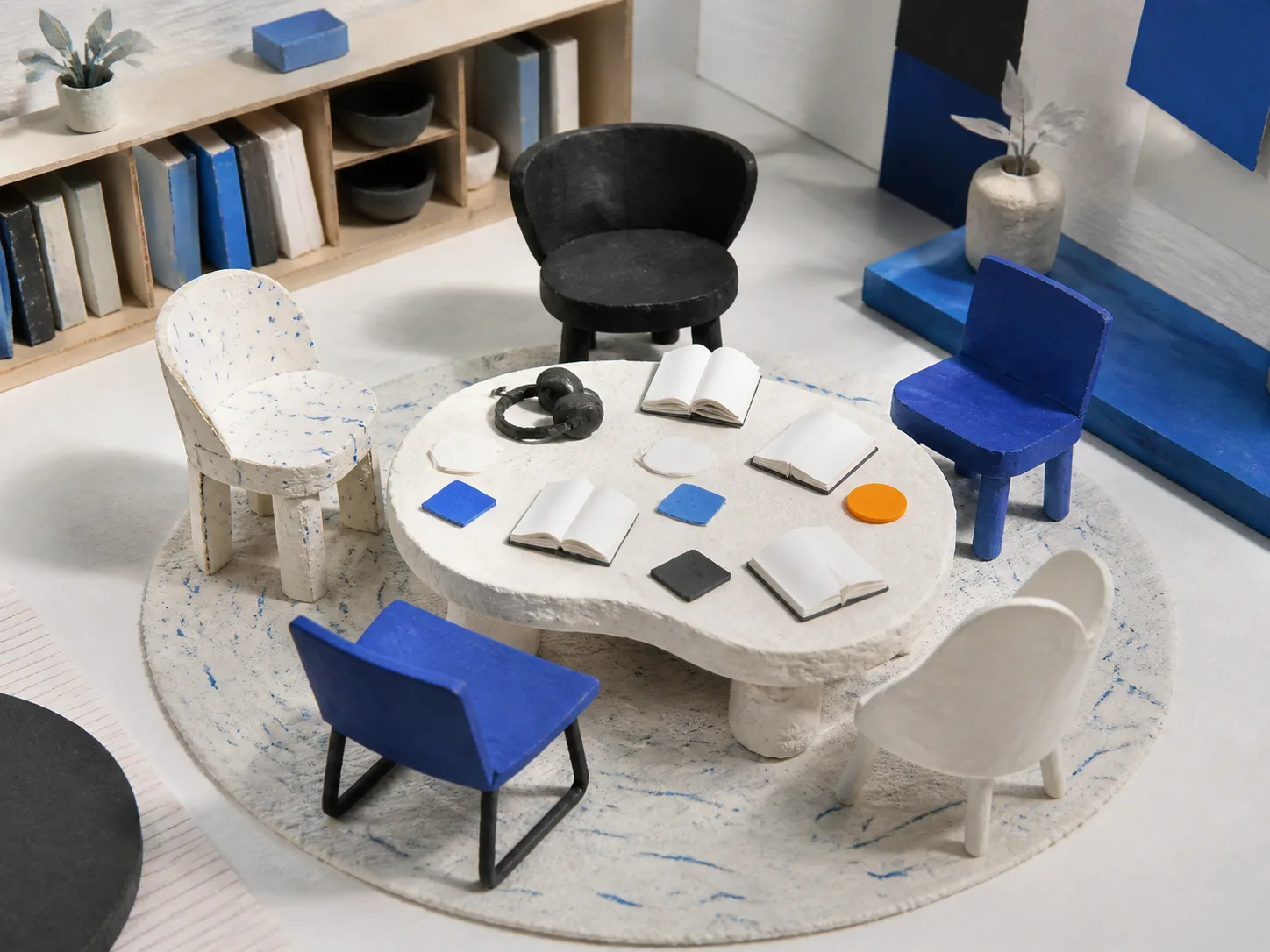
A set of club-room photographs shows people close together around low tables. Laptops are open. Notes, drinks, books, and a microphone share the space. The room looks used rather than arranged for a brochure.
That everyday quality matters. Speaking practice can feel harder when every sentence is treated as a performance. A shared room changes the terms: someone can pause, ask for a word, laugh at a tangle, then start the sentence again.
Keep the conversation moving
Helpful partners do not correct every sound in real time. They listen first. If meaning gets lost, they can ask a short question or offer one word that lets the speaker continue.
The goal is not a perfect transcript. It is a conversation that survives a mistake.
Leave room for different speeds
Some people think aloud. Others need a moment before they speak. A club room works best when both rhythms have space and no one has to earn the right to join in.